
Sunday, February 5, 2023

Saturday, February 4, 2023
The Daily Drift
Welcome to today's issue of Carolina Naturally

'Nuff Said!
Today is February 4, 2023

Today is: World Play Your Ukelele Day


In 211CE: Roman Emperor Septimius Severus dies in Eboracum (York) in England, leaving the Roman Empire in the hands of his two quarrelsome sons, Caracalla and Geta

Ain't That The Truth
Editorial Comment

Taking back our mellow.
Returning to the joy is the agenda of the day.
No more concern for those that attempt too harsh our mellow.
The Soul Vacation begins ...
We do want to give a shout out to our readers in Canada and Italy and say thanks for stopping by to read Carolina Naturally.
Remember to have fun and enjoy life.
Editorial Staff
The Forty Year candle


Your Memory May Be Better Than You Think
 The next time you’re struggling to remember exactly where you left your keys, parked your car, or put down your glasses, don’t necessarily give up on your memory completely.
A new study suggests that people are also surprisingly good at knowing where and when they saw those objects. When shown objects on a 7-by-7 grid, many observers could recall the location of over 100 items, choosing the right location or a cell right next to the correct one.
A series of three experiments conducted by investigators from Brigham and Women’s Hospital illustrate that people have a “spatial massive memory” (SMM) for where objects are located and a “temporal massive memory” (TMM) for when objects were last seen. Their results are published in Current Biology.“While our spatial and temporal memory for objects may not be as impressive as some birds or squirrels … our data show that we do have massive memory for objects.”— Jeremy Wolfe, BWH
“People often think that their memory is terrible, but our results show that we can recall where and when an object appeared with good, if not perfect, precision for a large number of objects,” said corresponding author Jeremy Wolfe of the Brigham’s Department of Surgery. “While our spatial and temporal memory for objects may not be as impressive as some birds or squirrels, who have to remember where they hid their food for the winter, our data show that we do have massive memory for objects.”
To conduct their study, Wolfe and colleagues asked participants to remember a number of objects placed on a 7-by-7 grid. Each item was highlighted for two seconds by placing a red square around it. After participants were shown the items, all of the images were removed and the participants were then tested on their ability to recall if they had seen an item before and, if so, where it had been located on the grid.
“In some ways, this is a bit like the game of Memory that many of us played as children, where we turned over a card and then tried to recall the location of a matching card that we had seen before,” said Wolfe. “But unlike in the children’s game, we didn’t just count the exact ‘correct’ answer. We measured how close the participant got to the previously seen image.”
Altogether observers saw 300 different objects. Many observers could localize over 100 items to within +/- one cell of the true object location. In a subsequent experiment, participants were shown items one at a time and were asked to click on a timeline, present on the screen, to indicate when they had seen the object. The researchers reported that participants localized 60-80 percent of old items to within +/-10 percent of their correct time, markedly better than the 40 percent that they could have gotten by guessing.
The authors note that further experiments would be needed to define the upper limits of massive memory or to investigate other topics such as possible gender effects on memory.
Wolfe explains that some things slide into our long-term memory far more easily than others — understanding what we can remember most easily, such as pictures of objects and scenes, could help us make the most of our memory.
“Since ancient times, people have been using memory tricks related to our ability to remember pictures and scenes to help encode large amounts of information to store in their minds. In that sense, it’s not terribly surprising that, using our methods, we discover that we’re pretty good at remembering where objects are,” said Wolfe. “Our experiments show that spatial and temporal massive memories exist. Future research will define their limits.”

A new study suggests that people are also surprisingly good at knowing where and when they saw those objects. When shown objects on a 7-by-7 grid, many observers could recall the location of over 100 items, choosing the right location or a cell right next to the correct one.
A series of three experiments conducted by investigators from Brigham and Women’s Hospital illustrate that people have a “spatial massive memory” (SMM) for where objects are located and a “temporal massive memory” (TMM) for when objects were last seen. Their results are published in Current Biology.
“While our spatial and temporal memory for objects may not be as impressive as some birds or squirrels … our data show that we do have massive memory for objects.”— Jeremy Wolfe, BWH
To conduct their study, Wolfe and colleagues asked participants to remember a number of objects placed on a 7-by-7 grid. Each item was highlighted for two seconds by placing a red square around it. After participants were shown the items, all of the images were removed and the participants were then tested on their ability to recall if they had seen an item before and, if so, where it had been located on the grid.
“In some ways, this is a bit like the game of Memory that many of us played as children, where we turned over a card and then tried to recall the location of a matching card that we had seen before,” said Wolfe. “But unlike in the children’s game, we didn’t just count the exact ‘correct’ answer. We measured how close the participant got to the previously seen image.”
Altogether observers saw 300 different objects. Many observers could localize over 100 items to within +/- one cell of the true object location. In a subsequent experiment, participants were shown items one at a time and were asked to click on a timeline, present on the screen, to indicate when they had seen the object. The researchers reported that participants localized 60-80 percent of old items to within +/-10 percent of their correct time, markedly better than the 40 percent that they could have gotten by guessing.
The authors note that further experiments would be needed to define the upper limits of massive memory or to investigate other topics such as possible gender effects on memory.
Wolfe explains that some things slide into our long-term memory far more easily than others — understanding what we can remember most easily, such as pictures of objects and scenes, could help us make the most of our memory.
“Since ancient times, people have been using memory tricks related to our ability to remember pictures and scenes to help encode large amounts of information to store in their minds. In that sense, it’s not terribly surprising that, using our methods, we discover that we’re pretty good at remembering where objects are,” said Wolfe. “Our experiments show that spatial and temporal massive memories exist. Future research will define their limits.”
Buzzing the brain with electricity can boost the willingness to engage in mental effort

Read More
Accidental Discoveries That Turned Out to be Game Changers
If you've been following Neatorama for years, you can go ahead and guess that this list will contain Post-it Notes, microwave cooking, penicillin, and Viagra. But this video covers 13 different accidental discoveries, and Viagra is not among them (but you can read that story here). I might argue with the inclusion of Nutella, which doesn't seem to have been an accident at all, but it's still an interesting story. They all are! History classes in school have a hard time covering just the important foundational stories they need to go over, so the history of everyday products rarely gets a mention, no matter how good the story is. That's what the Weird History channel is for.

Why Store-bought Chicken Broth is Nothing Like Homemade Chicken Broth

My quest to find the answer started simply enough, and in a state of what was, in retrospect, blissful ignorance. I had no intimation of what was to come: the billion-dollar multinational flavor and fragrance companies, the “spray-dried” broth, the “clean label protein solutions,” the “kitchen-like ingredients,” and the corporate dream of a “fully sustainable chicken stream.” A whole new world, at once surreal, banal, and depressingly inevitable, was hidden in the watery depths of store-bought chicken stock, just waiting for me to jump in.
Galutin found nothing illegal going on, but he brings us a thought-provoking story of how chicken broth is processed for our convenience and food manufacturers' profits. What's even more depressing is that broth is just one product in a world of processed foods we eat every day.
Sushi conveyor belt pranks spark outrage in Japan

Several videos dubbed "sushi terrorism" have emerged on social media including Twitter and TikTok in recent days, some of them apparently weeks or even years old.
In one, viewed nearly 40 million times on Twitter, an apparently teenaged customer licks the top of a communal soy sauce bottle and the rim of a teacup he then places back on a shelf, before licking his finger and touching a piece of sushi as it goes past on the belt.
The video, filmed at a branch of the Sushiro chain in the central Japanese city of Gifu, prompted stocks in the restaurant's parent company to plunge nearly five percent Tuesday.
Sushi conveyor belt pranks spark outrage in Japan
If Mushrooms Are Growing in Your Lawn, This Is What It Means

If Mushrooms Are Growing in Your Lawn, This Is What It Means

Amateur Archaeologist in Belgium Finds Fragment of Mysterious Roman Object That May Have Been Used for Sorcery

The dodecahedron is a 12-sided, hollow metal object that has small balls attached to each corner. Similar ones have been discovered previously.
The fragment of this one was found by an amateur archaeologist in the Northern Flanders region of Belgium who was searching in a plowed field. The amateur archaeologist passed the fragment on to the Gallo-Roman Museum in Tongeren, a small city in eastern Belgium.
There are no written records mentioning dodecahedrons, so archaeologists have a number of theories about its use but few concrete answers. Some believe that dodecahedrons were used for taking measurements, as a knitting tool, a test of a metal smith’s skills, or even as a weapon. However, experts at the Gallo-Roman Museum believe that dodecahedrons were used for magical purposes.
“We rather think it has something to do with non-official activities like sorcery, fortune-telling, and so on,” Guido Creemers, a curator at the Gallo-Roman Museum, told Live Science.
Its magical purpose could be explained by a variety of factors. First, dodecahedrons were mostly found in the Gallo-Roman Empire, an offshoot of the Roman Empire in which magic rituals were known to have taken place. The lack of written records about dodecahedrons may point to a need to use these objects in secret, as divination and magic rituals were punished severely in the Roman Empire. Dodecahedrons have often been found near burial sites, where these rituals may have taken place.
The fragment will go on view at the Gallo-Roman Museum in February.
Face of a man who died 9,500 years ago, brought to life by scientists

The skull belonged to a man who died – aged over 40 years old – near the city of Jericho, today part of the Palestinian West Bank.
Hoping to preserve the facial features of the dead, the ancients decorated his skull with plaster and gave it shells for eyes.
It was the the ‘first facial reconstruction in the world’ according to Brazilian graphics expert Cicero Moraes.
But now Moraes has rebuilt the dead man’s face using the latest techniques, offering a unique window into the past.
Face of a man who died 9,500 years ago, brought to life by scientists

Some scientists think we may be living in a Groundhog Day universe

This is the Big Bang theory, a model that explains much of what we observe when we look out at the universe. Between all the stars, galaxies and clouds of gas is cosmic background radiation — heat residue from the Big Bang, which is still faintly visible today, and is one of the most glaring pieces of evidence that the universe started from a single point. Measurements using multiple different tools, including satellites and telescopes, indicate this residue is consistent with models of an explosive birth to our universe.
Some scientists think we may be living in a Groundhog Day universe
Scientists Find New Evidence of Hidden Ocean World in Our Solar System

In a press release out of the Southwest Research Institute, principal scientist Dr. Alyssa Rhoden said that NASA's Cassini mission to Saturn had "identified a curious libration, or oscillation, in Mimas' rotation, which often points to a geologically active body able to support an internal ocean."
Translation: Mimas' wobble seems to suggest that it could contain an ocean under its icy surface.
A specialist in the geophysics of icy satellites — say that three times fast! — Rhoden is one of the authors of a new paper published in the journal Geophysical Research Letters about the tantalizing hypothesis centered on Saturn's smallest and innermost moon, which she jokingly admitted looks "much like the Death Star from Star Wars" because of Herschel, its huge impact crater.
Scientists Find New Evidence of Hidden Ocean World in Our Solar System
Why do black holes twinkle?

And yet, despite their famous blackness, some black holes are quite visible. The gas and stars these galactic vacuums devour are sucked into a glowing disc before their one-way trip into the hole, and these discs can shine more brightly than entire galaxies.
Stranger still, these black holes twinkle. The brightness of the glowing discs can fluctuate from day to day, and nobody is entirely sure why.
We piggy-backed on NASA’s asteroid defense effort to watch more than 5,000 of the fastest-growing black holes in the sky for five years, in an attempt to understand why this twinkling occurs. In a new paper in Nature Astronomy, we report our answer: a kind of turbulence driven by friction and intense gravitational and magnetic fields.
.jpeg)
Mini creatures with mighty voices know their audience and focus on a single frequency

These Ants Don’t Just Walk Randomly; They “Meander” Systematically
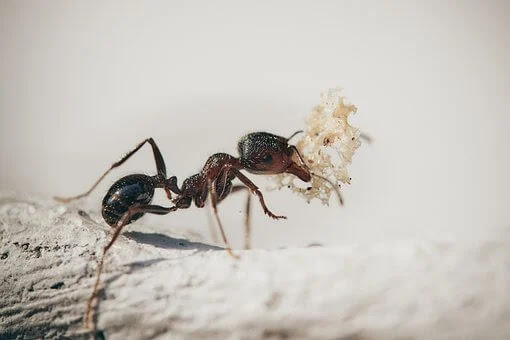
“Previously, researchers in the field assumed that ants move in a pure random walk when searching for targets of which they don’t know their location,” said Stefan Popp (@StefanPopp2) of the University of Arizona, Tucson. “We found that rock ants, Temnothorax rugatulus, show a striking, regular meandering pattern when exploring the area around their nests. This means that the ants smoothly alternate left and right turns on a relatively regular length scale of roughly three body lengths.”
He explains that he and colleagues refer to the behavior as “meandering” because it reminds them of the pattern formed by a meandering river. What’s more, their study finds that the ants’ meandering may make their search more efficient than a pure random search would. That’s because ants tend to cross their own paths less frequently while meandering than random walk tracks, so that they less often search the same area twice.
Popp’s team set out to learn how ants react to nestmates and surface structure on a colony scale. Because it’s difficult to track ants in their natural environment, they moved a whole colony into the lab, where they could easily track all ants automatically and under constant conditions.
They soon noticed the meandering pattern of the ants as they walked around. It raised an immediate question: could the patterns they were seeing arise from random squiggles, without any systematic rules? Or were the ants moving in a more systematic, non-random way? To find out, they compared the ant tracks with computer-simulated random walk patterns.
“We wanted to make sure that we are not just seeing patterns where there is none,” Popp said. “We then used a simple statistical method of detecting regularity in movement tracks to get a simple answer.”
They report that their studies found 78% of ants showed significant negative autocorrelation around 10 mm, or about 3 body lengths. That means that turns in one direction usually were followed by turns in the opposite direction after a roughly constant distance. They say it likely makes the ants’ search more efficient, as the insects can stay close to the nest without repeatedly searching the same areas. Popp says he was most intrigued by the extreme forms the ants’ patterns could take from these simple principles.
“Parts of some tracks look like the curled threads one can pull out of a piece of clothing, and in some it looks like the meandering path meanders itself,” he said, “creating a seemingly fractal structure. It reminds me of some space-filling curves we know from math!”
The new study is the first to find evidence for efficient search through regular meandering in a freely searching animal, they report. It also adds another complex behavior for ants, suggesting that there’s still more to learn.
Popp says he’s most fascinated in questions about the rules in an ant’s mind that allow such complex search patterns to emerge. He notes also that the ants have solved a problem of collective search over the course of evolution in a way that might find application for designing autonomous swarms of search robots or drones for use in disaster areas or unexplored landscapes.
'Leonardo DiCaprio' snake with bright orange eyes discovered in Panama jungle

"These new species of snake are just the tip of the iceberg in terms of new species discoveries in this region," lead author Alejandro Arteaga, president and research director at the Khamai Foundation, a conservation-focused nongovernmental organization, said in a statement. "But if illegal mining continues at this rate, there may not be an opportunity to make any future discoveries."
S. irmelindicaprioae derives its name from actor and conservationist Leonardo DiCaprio, who asked that the red-eyed snake be named for his mother, Irmelin Indenbirken. DiCaprio's eponymous snake is about 15 inches (38 centimeters) long, and spends its evenings on palm fronds 10 feet (3 meters) above the ground, foraging for snails and slugs. Docile to a fault, the snake defends itself not by biting but by coiling protectively around its head and emitting a foul odor.
'Leonardo DiCaprio' snake with bright orange eyes discovered in Panama jungle
World's largest, rarest ocean stingrays spotted and tagged in Mozambique

The smalleye species is known for being the world’s largest and rarest marine stingray — and was finally spotted in Mozambique.
National Geographic explorer and ray expert Andrea Marshall set out off the coast of the Bazaruto Archipelago in search of the rare stingray.
After weeks of looking, Marshall spotted a smalleye in some shallow water, National Geographic (NatGeo) reported.
She was able to dive in after it and touched it with a six-foot-long pole to extract a small skin sample from its underside.
The stingray stayed calm, which was good news for Marshall.
Smalleyes have a lethal stinging spine the length of a human forearm.
One wrong move "would put us in mortal danger," Marshall told NatGeo.
Marshall is also the founder of the Mozambique-based Marine Megafauna Foundation.
The fish, native to the Pacific Ocean, can grow up to 10 feet long and eight feet wide.
The species earned the name "smalleyes" for their little raisin-sized eyes, said NatGeo.
Since they're so rarely spotted, smalleyes are likely a critically endangered species, that publication also said.
Marshall and her colleagues spent the following months diving at dawn for other smalleyes along the Mozambican coast.
The team tagged 11 smalleyes using both acoustic and satellite tags, in order to track long-distance travel and fine-scale movements.
Although the mission was a success, Marshall shared with NatGeo that she and her team encountered a few close calls.
This includes learning how the massive stingray can raise its stinger over its back and swing it around, much like a scorpion.
Preliminary data shows that the stingray can dive more than 650 feet deep and swim hundreds of miles in a day, according to Marshall.
Researchers hope that tagging these stingrays will provide an answer to why they travel as far as they do.
The stingray's diving depth could explain its extremely small eyes, since vision isn’t as crucial down in the darkness, Marshall said.
The tags reportedly revealed that the stingrays hang out near the reefs at night, which could mean they feed at dawn and dusk.
Many questions remain regarding the behavior of smalleye stingrays; the International Union for Conservation of Nature lists the species as "data deficient."
Marshall’s goal is to gather enough information to lead to better protections for smalleyes, NatGeo notes.
Anyone wanting more detail can visit nationalgeographic.com.
Seven of the oldest marine species still alive today
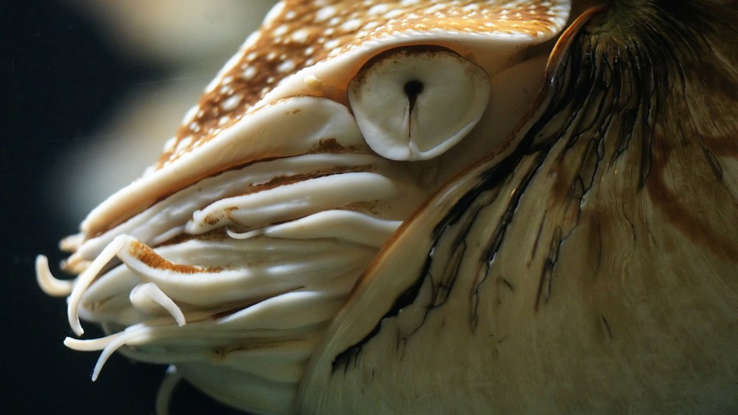
Seven of the oldest marine species still alive today
Subscribe to:
Posts (Atom)
The Drift
Welcome to today's issue of Carolina Naturally 'Nuff Said! Today is June 21, 2023 Today is: World Music Day On This Day In History...

-
 If you're not an angler, you might be surprised to see this kind of gruesome sign near fishing piers. When this one was posted at Reddi...
 -
 Want to try something new for retirement? Have you thought about retirement nudist communities? Retirement affords us the time to try new th...
 -
 Rainforests are dense forests in tropical regions inhabited by a variety of unusual species you won't find anywhere else on the planet. ...